
2026 MLA Interviews
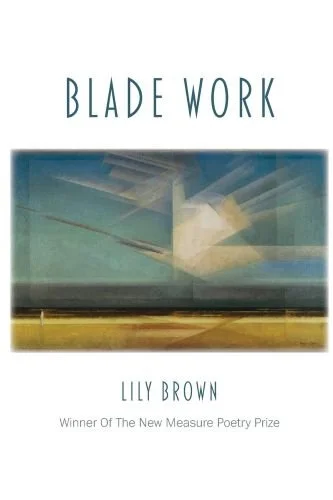
What types of edits are hardest for you to make?
The hardest types of edits for me are when I’m in the final stages of revising a poem, and I realize it works better without a line or section to which I may have grown attached. Generally, if I feel a poem is improved by cutting a line or image or metaphor I like, I may save those lines and see if they can be turned into something else down the line.
I also find that editing, as a process, feels impossible if my brain isn’t tuned to the poem in the right way. There have been many times in my life when I’ve tried to go back into a poem to revise it and feel I can’t enter the poem at all—I can’t figure out the rhythms, the sounds, the metaphors. In these instances, I find it best to come back to the poem another time, or to spend some time reading poetry or a novel by a beloved author to tune myself to the channel I need.
Are there any prompts, exercises, or places you return to when in a poetic rut?
When I’m in a rut or the writing isn’t coming, I need to unplug, read, look at art, get out in nature, and generally let my mind wander. Our daily lives don’t always give us the space to simply be bored, daydream, or notice the details of environment or lived experience that are often a very important part of poetry for me.
I like to read Emily Dickinson and Wallace Stevens when I’m stuck, or find a contemporary poet I’ve never read to try to jumpstart the poetic part of my brain. Sometimes I change the surface or shape of what I’m writing on, using bigger paper, turning the page sideways, or writing a series of short notes on post-its and then
combining them later.
I also belong to an amazing writing group, and the prompts members bring in are always helpful. Lately I’ve found ‘inversions’—basically trying to write the opposite of an existing poem, word by word, line by line, or stanza by stanza—to be very generative.
What experiences or emotions do you find hardest to pin into a poem?
When I write, the most important aspect of my process is having no preconceived ideas about what I’m writing. So, in theory, any type of experience or emotion can enter into a poem—in many ways, I think what my poems do is to amalgamate many types of experience into a kind of simultaneity. Any given poem could include memories, emotions, conversations both personal and overheard, dreams, meta-reflection and reflections on cognition, etc. I sometimes think of Ezra Pound’s definition of the image, “that which presents an intellectual and emotional complex in an instant of time,” when I’m contemplating what I hope my poems may offer to the reader.
What’s hardest to include in a poem is what I’m too intent on including or trying to bring into a poem. The operative word there is try because the writing process is one that usually happens (if I’m lucky) in a flow state where I’m not consciously trying to do anything but create a sort of poetic machine with language, sound play, and literary language of which I feel proud.
Nonfiction & John N. Cole Award Winner
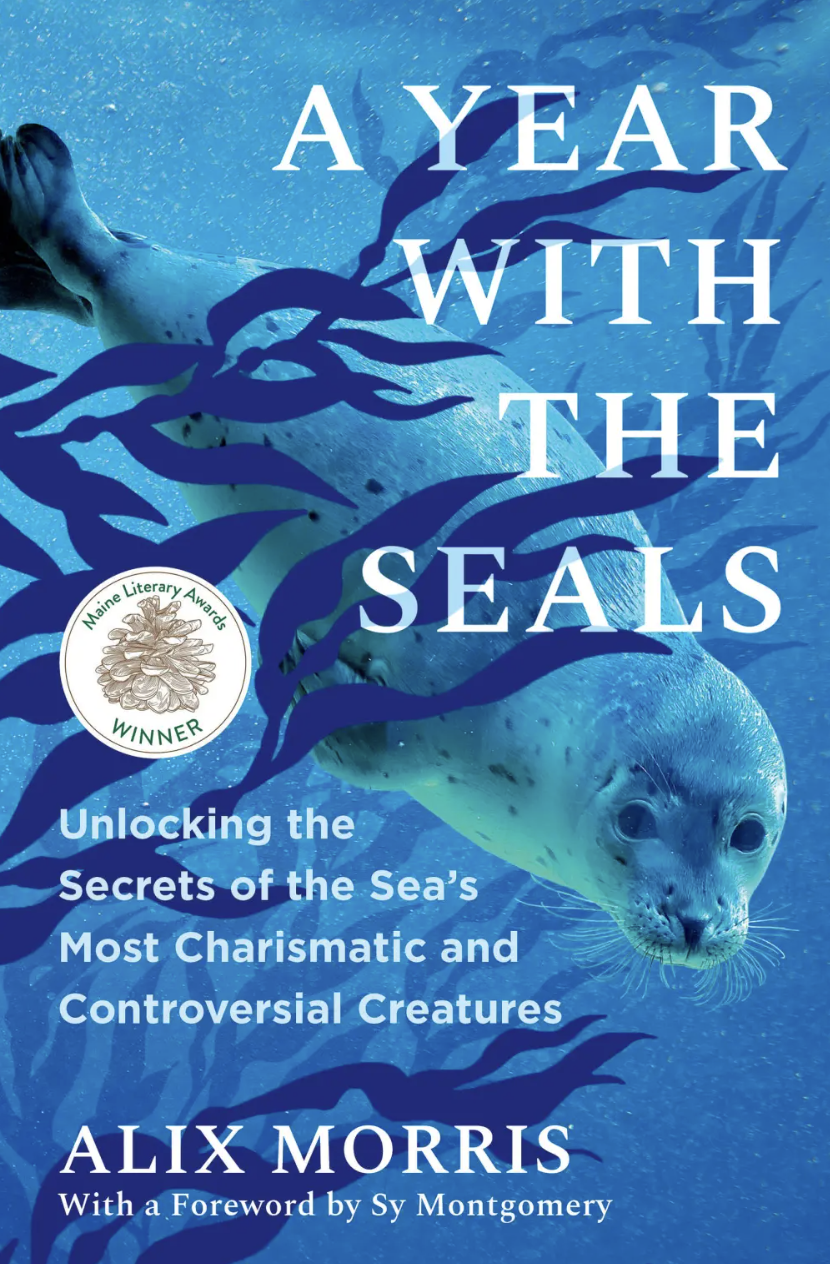
A Year with the Seals: Unlocking the Secrets of the Sea's Most Charismatic and Controversial Creatures
Alix Morris
Which human-seal relationships that you witnessed during your research provided the most complex or unexpected insights?
While the book is largely focused on seal population recovery in the Northeast, I was curious about the parallel story playing out on the West Coast. One moment that really stood out during my research occurred while I was aboard a fishing boat in Tacoma, Washington. I had been invited to join a Puyallup fisherman and tribal council member, James Rideout, to witness the “seal problem” for myself. James and other members of the Puyallup Tribe had grown increasingly frustrated with rising numbers of seals and sea lions feeding on salmon. Salmon were a critical part of the tribe’s culture and identity, and they’d fought countless battles defending their treaty rights to access this resource. To help boost declining populations, they grew salmon in hatcheries and released them upriver. But seals and sea lions had discovered this and would position themselves at the mouth of the river to feed on the fish.
That day, as we were motoring upriver, James spotted half a dozen harbor seals and cut the engine. For a time, we watched them. One by one, the seals popped their heads up around the boat, staring right at us with their big, liquid eyes. They were playful, splashing about near the riverbank, rolling in the current. Forgetting why we were there, I smiled, amused by their antics. But then I looked at James. He was watching the seals with a sad, defeated expression. There were tears in his eyes. He had grown up salmon fishing on the river, right in this very spot. For him, these seals represented a threat to his way of life, to his identity. I’ll never forget that moment.
Have your own approaches to and understanding of wildlife conservation changed?
One of the biggest realizations I had is that the primary challenge with wildlife conservation has very little to do with wildlife, and a whole lot to do with us. One of the seal biologists I interviewed put it best: “It’s not human-wildlife conflict. It’s human-human conflict. The wildlife is fine without us.” This was an ongoing theme I explored in the book, including the idea that we are far more likely to protect species that look and act like humans. Go figure!
I was also mystified by how much we don’t know about marine ecosystems, and how the disappearance (like when we killed off seals with the hope of reducing fishing competition) and reemergence of a species can have knock-on effects that impact entire food webs. Seals spend more than half of their lives underwater, and despite many decades of research, there’s so much we don’t know about how they live their lives—their social dynamics, their hunting behavior, the type and quantity of fish they consume. On the one hand, I love how much more there is to learn about the natural world, and the mysteries that continue to elude us. On the other, it’s alarming to think about the management decisions wildlife officials need to make with such a dearth of data available to them.
What challenges did you face in writing your first book?
Where to begin! To be honest, I had absolutely no idea what an undertaking writing a book would be, or how obsessive I would become about the research. There was always someone new to interview, a new study to analyze, a new perspective to consider. And the more I learned, the more questions I had. So I think the biggest challenge was knowing when to stop researching and to start writing, and to trust that I had something worth saying. Gentle nudges from my editor and manuscript deadlines certainly helped with that.
It’s such a privilege to be able to write a book, but it also requires a lot of sacrifice. For me, it wouldn’t have been possible without an incredibly supportive community of friends and family. No one authors alone, and I’m so grateful to my community for helping me to reach the finish line.
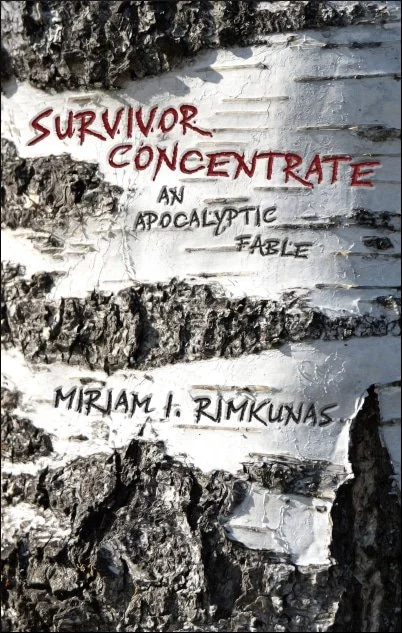
Did the Maine landscape play any role in developing the setting of your novel?
In the early years of editing I was told more than once that my manuscript had a fairytale feel to it. I think "fable" is more fitting, as the one unifying feature of all fables is that nature is given a voice. The voice could belong to frogs and mice who wear little jackets and have little social lives and politics, or it can be something more sublime, such as a singing river, a whispering wind, and in the case of my book, a sentient wood.
Can you share a bit about your book's designation as an "apocalyptic fable?" What do you hope readers take away from such a story?
Survivor Concentrate is my attempt at reframing what survival looks like. I want readers to eschew the notion that survival is for the fittest, the wealthiest, the most pious, or the most productive. It's none of those things. Survival is having hope, choosing vulnerability instead of violence, giving aid before judgment, and participating in that mycelium network of compassion that is community.
How did you decide where to insert poetic segments into the narrative?
The poetic voice usually pipes up whenever there's a common theme amidst the human characters that can be drawn back to the natural setting of the taiga. In some places it serves as an omniscient framework for the story, in other places it's just the woods, giving their two cents.
What types of apocalyptic stories do you most enjoy reading and writing?
I like this question, because I think humanity has been obsessed with "the end times" since our beginning, and any media in which humans grapple with our own mortality has a touch of the apocalypse in it. I find the true story of the atom bomb very compelling and disturbing. When Trinity was first detonated in White Sands, I believe humanity's trajectory shifted on a global scale whether we realized it or not at the time. But that's just one of countless apocalyptic stories, some more serious than others. As a horror fan, the undead apocalypse has always tingled my spine. Romero's "Night of the Living Dead" not only frightens me, but the social commentary woven in between the ghouls gives me goosebumps and inspires me in my own writing.
What is your genre of choice to read in your free time?
I tend to read literary fiction, but I like to say that I'll read anything—nonfiction, genre fiction, memoir, short works. For example, the best book I've read (so far) this year is a historical nonfiction titled Evergreen: The Trees That Shaped America, written by Trent Prezler. However, I've also been enjoying Agatha Christie’s Poirot collection and the Stormlight series.
What was your process for writing this story?
"At the Auction House" is actually the third iteration of this story. I wrote the first iteration in 2021 and titled it, "Much of the Same." The second was half "Much of the Same" and half "At the Auction House." It was titled, "The New Way." The original concept—which I carried from one version to the next—was a funeral setting in which the deceased is still conscious. The first draft was (if you can believe it) much darker. In one scene, for example, the reader sees the dirt raining down upon the narrator as they're buried. Perhaps that is why I think of "At the Auction House" as being a more lighthearted story... But I digress. The crux of it is: I am not religious and I do not have a strong spirituality; I assume that when we die, our consciousness dies with us. This story was my way of processing that assumption.
In your short story, an auction of the narrator's body parts takes the place of a traditional funeral. What would you choose for your own last rites?
I am thrilled to be asked this question! I have instructions written in my will, but no one ever asks me what they are. For my last rites, I have requested a nondenominational celebration of life, and I've suggested several songs that could be played, including "Judy and the Dream of Horses" by Belle and Sebastian. Ideally my body would be laid out on a hill somewhere to decay naturally, but I have looked into this and you have to own a large amount of land. But it won't really matter to me because—as I stated previously—I think my consciousness will be gone. So whoever can do whatever they want with what's left!
Did your work as a teacher inform your writing for a young audience?
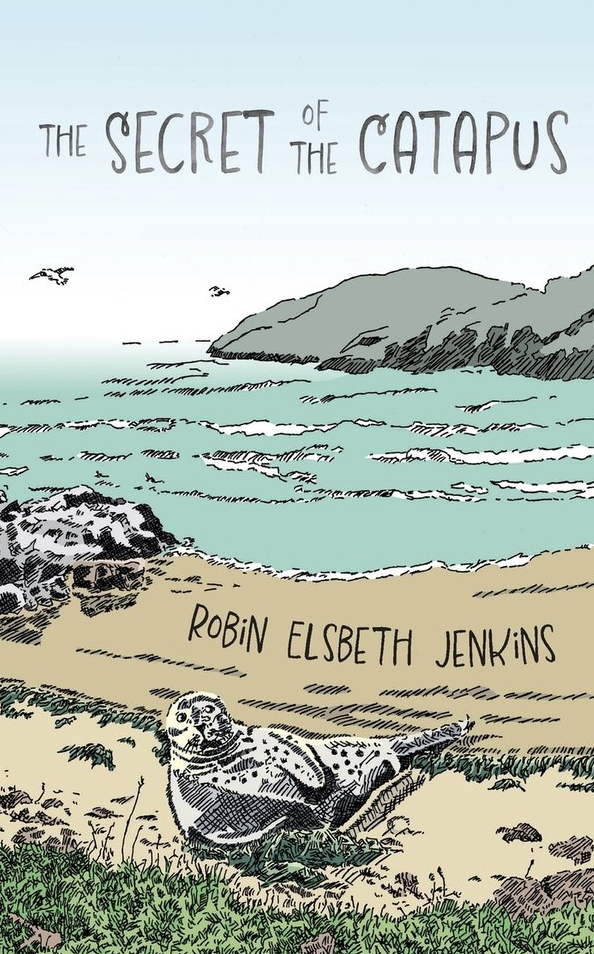
Yes, I taught literacy to students in elementary and middle school, and over the years, became well acquainted with young people's literature as a genre. I grew to love the "coming of age" character arc in classic novels such as "Bridge to Terabithia", "Roll of Thunder, Hear my Cry", "The Watsons Go to Birmingham 1963", and others. Social justice themes in literature were important to me as a teacher, and I wanted to see if I could incorporate social and environmental themes in a book of my own making and hopefully engage young readers.
Do your characters and conversations reflect some pieces of your community?
Yes, I spent the early part of my teaching years in Washington County, Maine, and my characters' experiences and ways of expressing themselves reflect growing up in that region. My students had a great regard for the grandparents who helped to raise them, and some of their speech patterns echoed those of an earlier generation: "My land!", and "I imagine", for example. Many families dug clams, raked berries, fir-tipped, or made Christmas wreaths, as more than one source of income was needed to get by. Despite noticeable changes in the environment (warming water, sea level rise, green crab infestation), conservative ideas about climate change have persisted, and new ideas are not always welcome. As well, people “from away”, like my main character, Ellie, are not always treated with kindness. Ellie finds friendship with a group of local kids and learns to respect the cultural values of her new home, while finding her own place in the community. She shines as a young climate warrior, honoring her grandmother’s legacy of environmentalism.
Ellie, the young protagonist, believes her grandma "wouldn't want everything spoiled by climate change." What conviction or lesson do you hope to pass on to your grandchildren?
At this time, my grandchildren are ages one and three. Time has wings, as they say, and before I know it, they will be ten and twelve. I hope their young lives are full of wonder and joy. I hope they will develop a love for the natural world and become defenders of it. The coming years will bring many challenges, climate change not the least of them, and I hope that solving it is not left entirely on their shoulders. I hope they will lean on family and community in difficult times with the understanding that they need not face problems alone. I hope they will develop the skill of active listening, and will have the ability to sift through information and ideas to think critically for themselves. I hope they will have a genuine regard for themselves, and will endeavor to do and become without fear of failure. As today’s children become young adults, they will need to develop a sense of urgency, as well as agency, in order to meet the challenges that lie ahead, as climate change, if left unaddressed, will certainly spoil everything!
Growing up, what did Maine feel like to you? How has that setting influenced your writing?
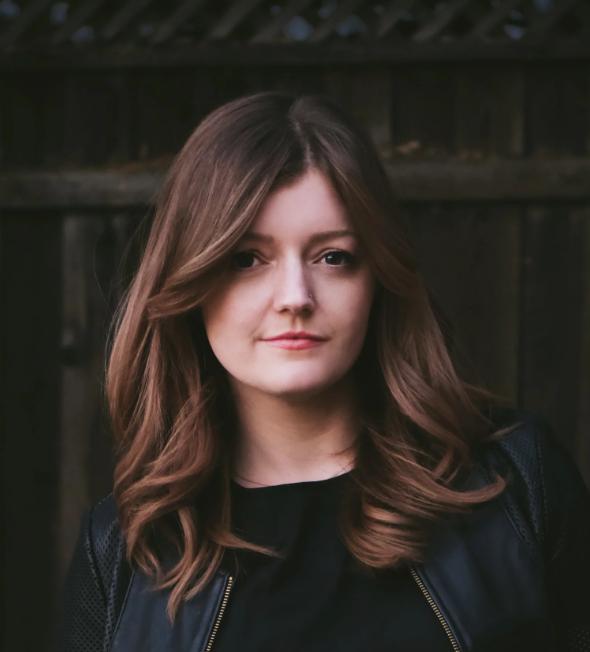
Growing up, I spent most of the year in Illinois, so every summer when we came to Maine, I felt like I was entering a fantasy world. Everything enchanted me: the mountains, the misty forests, and especially the ocean. I loved poking around in tidepools and swimming until I couldn't feel my toes. I felt overwhelmed and awed by the beauty of Maine's nature -- an emotional experience I now know the Romantics called the sublime -- and when I'm writing, I do my best to capture that emotional intensity. If at some point in my book, the reader gets the same wrenching feeling I get when I stand on top of a hundred-foot cliff looking out at a limitless sea, I feel like I've done my job.
Technology plays a role as a kind of supernatural gothic element in your story. What else do you favor, either as a writer or a reader, as features of modern gothic?
To me, the important features of the gothic genre are mostly emotional: terror, claustrophobia, suspicion, the sublime. Usually there's a focus on history or legacy, as well as a supernatural element. But I think what interests me most about the gothic is the idea of unknowability. These days, we are used to getting information easily (even if sometimes the information is incorrect). What makes the gothic unique is that it shows us that danger can come from an unknowable or even impossible source. I enjoy sitting in that discomfort and making reader sit in it, too.
What was your initial inspiration for writing crime fiction?
Sometimes people who know me are surprised to read my books, because I am a pretty friendly person and don't seem like someone who would write about such dark topics. I guess my writing helps me process some of my inner darkness! I love the emotional intensity and high stakes of crime fiction. Some of my favorite childhood memories are of rainy days in the library reading spooky books and murder mysteries (Goosebumps, Agatha Christie), and I think it's really special to get to recreate that intensity for other people. I also think genre fiction offers a lot of opportunity to play with formulas and reader expectations, which is very fun for me as a writer. And because crime violates social laws, writing about crime lets me tackle a lot of deeper topics, too. I think the best crime fiction offers an immersive emotional experience while you're reading it, but also makes you see the world a little differently when you're done.
How has your poetic voice evolved over time?
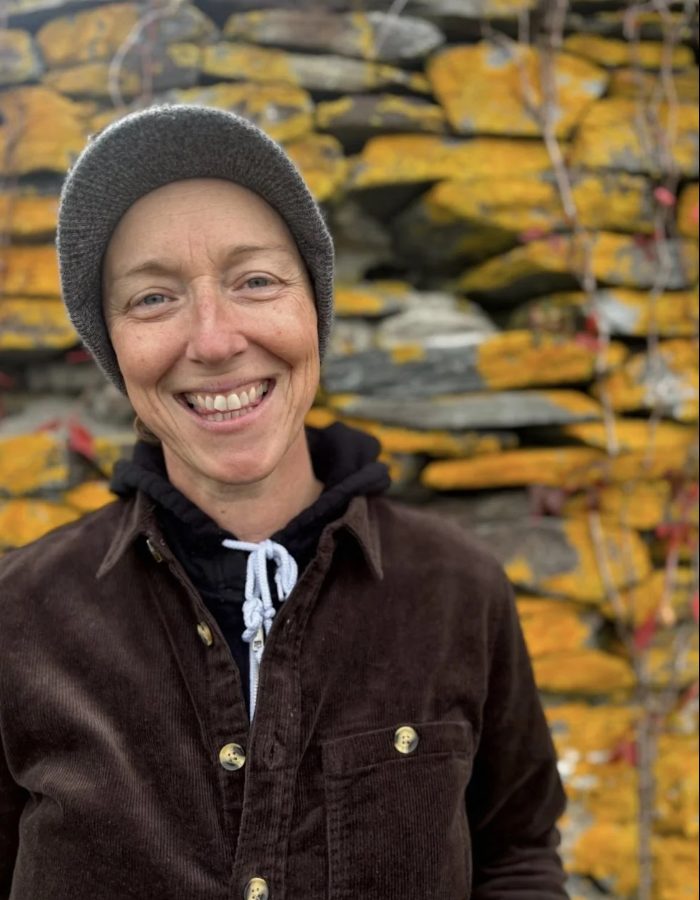
When I first started writing poetry it was for the stage. I started as a slam poet and competed in local, regional and national poetry slams through Poetry Slam Inc., a national poetry slam organization that curated most of the national slams. Academic study and practice of technical poetics has helped me learn how to say more with less words. I believe my voice has developed into one that is more embodied, clear and confident.
"from the barrens" is so raw but so tight. Did the final version appear after a few or many drafts?
This poem is one that I've been trying to write for a while. When I first met the lovely folks at MWPA, in 2023, at the Harvest Writers Retreat, I had started working with this form on another poem, Blueberry Stained Teeth. These poems are in conversation with one other and show different angles/timelines of the similar setting, in the blueberry barrens, at the Turner Farm, in Burlington, Maine, my first job at age 12. Because it was a work-in-progress that had several preceding poems that draw on the same vibe, this poem didn't need many drafts. The anchor of Andrea Gibson was an inspiring launching point for each stanza. I did have a handful of colleagues read it and offer feedback, some of which I used to fine-tune the final version.
Do you have a particular audience you hope to reach with your poetry?
Absolutely. First, I write for myself/my inner child so that I may heal. Second, I write for trans youth to be sure they know we are here, always have been here, and absolutely deserve to be here to share our stories. Other than that, my ideal audience is gender-expansive, left of liberal, anticapitalist, antiracist, antifascist, queer, trauma-informed, neurospicy, spiritual, centered around nature. My ideal audience is also anyone who strives to recover, grow, unlearn and unpack whiteness and bigotry, to take accountability and heal from the inflicted suffering of those disgusting features of western civilization.
Were any segments notably easier or harder to write than others?
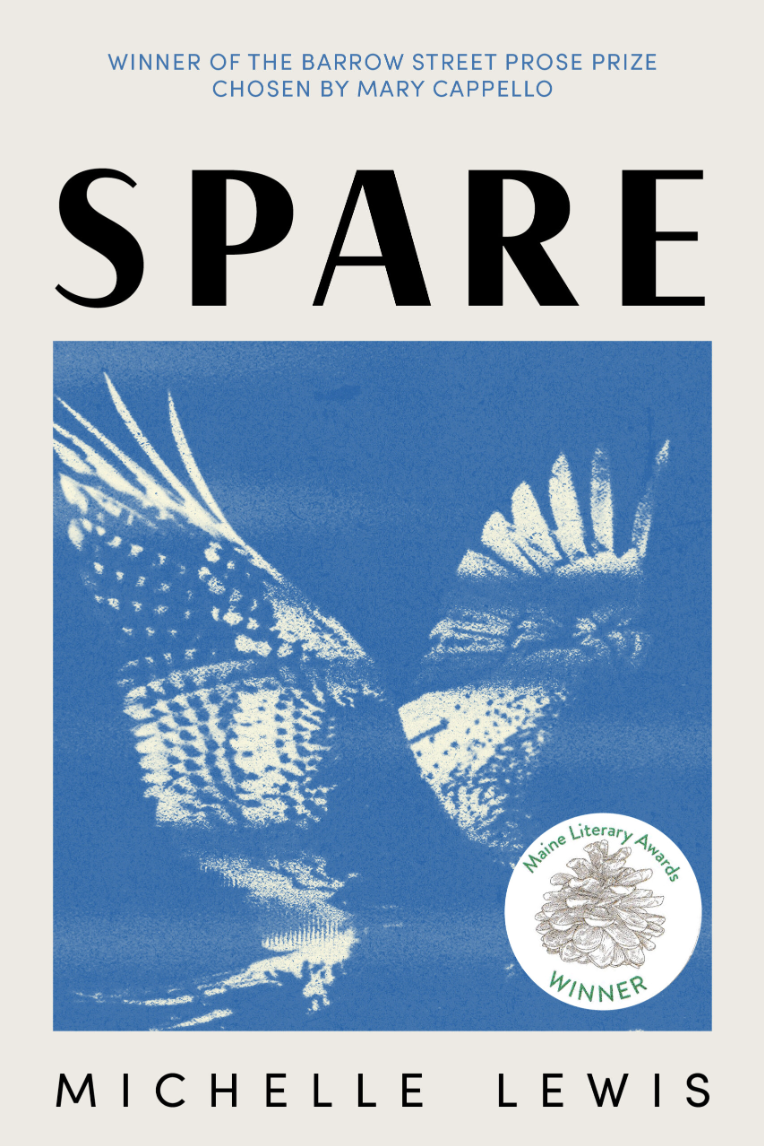
The personal history sections of this book were definitely harder to write. I loved working with the history, the artifacts, and the researched portions of Spare, and letting them accumulate and speak across the book. There was a real pleasure in seeing those connections build. And, it was information that could just be placed on the page without the need for me to explain or resolve it.
The personal sections were different. In those, I was often acting as a detective in my own past, trying to understand certain experiences and feelings as I wrote about them. The writing was actually paralleling that process — I was understanding it in real time. It was less “emotion recollected in tranquility” than making my way through a hurricane of my own making. At the same time, the researched braids began to change their meaning, too, as I increasingly had to understand them through the lens of the personal story.
Is there a particular audience you hope to reach?
The places of the book where I picture a particular audience most clearly are the parts that talk about addiction, intervention, and autonomy — parts that address what it means to decide what is worth saving. Those sorts of questions get interesting, because they place you in relation to other people, they are a way of taking a position, sometimes a societal position. In those instances, I’m writing to people that are struggling with those questions, and, if I’m being honest, people who aren’t struggling with them because they feel sure they already have the answers.
I also feel like this book reaches out to anyone who has felt, I guess the word is, mismeasured by conventional standards. Or who has had to understand their life against someone else’s terms. A phrase I have been using a lot, one that stuns me out of any kind of comparison-coma, is “You are running a different race entirely.” You don’t have this? You aren’t that? Of course not — your tools are different. Your terrain is different. The road is a different length, or it started in a weird place. I’d like to reach people like me who might benefit from remembering that.
What did it feel like to write and release this story?
Did my nervous system write this question? Earlier in my writing life, I wrote with a kind of facility that allowed me to get along, but something changed when I began working with my mentor, Arielle Greenberg. She encouraged me to write for stakes, to say things I actually believed, and to take risks. Then my work changed for the better. Since then, I write only from that place, and writing Spare meant staying there. Releasing that to the world has been a solid eleven on the discomfort scale. My “this feels risky and bad” gland has been shooting like garden hose for quite a while now. As a poet, hiding behind the lyric can be a very comfortable place to hang out, but this is nonfiction, and I edited most of the camouflaging foliage out of it.
What details help a short story feel most real or affecting for you?
Writing a short story and keeping it short was always a challenge for me. Even when I was younger, my stories would reach so far. I think it’s important to have a wide use of vocabulary when describing the five senses. I wanted to make sure there were no filler sentences, and that every word is used with intention. Keeping a short story engaging 100% of the time when you’re reading is the most important part in my opinion.
What challenges do you cencounter writing about difficult subject material?
When writing about deportation and sensitive topics such as the one in my story, I prioritize research. I have the privilege to write and bring attention to matters like this, and it’s important to do it accurately. I wouldn’t say I had any troubles, but making sure the information I’m researching is coming from a reliable source.
Did you have a favorite part of this story to write?
My favorite part about writing this story was adding details. It’s always been my favorite part of writing anything. I like making people feel like they are IN the story, making them think they can smell, hear, and see the scene. But about this story, the opening was my favorite part. I liked talking about how similar the girls are on the inside and the only thing that separates them as people are their race.
Has working with the MCC authors changed your own writing and reading?
Absolutely. I often say that while I may technically be the instructor, I've learned just as much from the women at the Maine Correctional Center as they have from me. I'm quite close with a few of them, having been writing and workshopping together for over thirteen years; they've become my sisters, my extended family. Their writing has reminded me that what matters most on the page is not cleverness but truth. These women write with urgency and purpose, and being in that room has made me a more attentive writer and reader. I'm increasingly drawn to books that embrace complexity, contradiction, and the possibility of transformation.
What was the biggest challenge in recovering the voices of women who have literally been hidden from the world?
The challenge wasn't helping them find their voices—it was helping them believe those voices mattered. Many had spent years being defined by court records, headlines, and institutional narratives. Over time, we created a space where they could tell their own stories. What continually amazed me was that their voices were never lost; they were simply waiting for permission to be heard, and not to be judged by their honesty, or taken advantage of when their guard was down.
How did you encourage authorial vulnerability in a space that intimidates and discourages vulnerability?
Slowly, and through trust. My friend and colleague Linda Holtslander and I never began with trauma. We started with childhood memories, family stories, objects, places, and small moments. We wrote alongside them and shared our own imperfect work. The workshop became one of the few places where the women weren't being judged or managed—they were simply writers. Once that happened, vulnerability often followed naturally. It was a holy experience.
What, for you, makes a "not much happens" book engaging and memorable? Do you have any favorites on your own bookshelf?
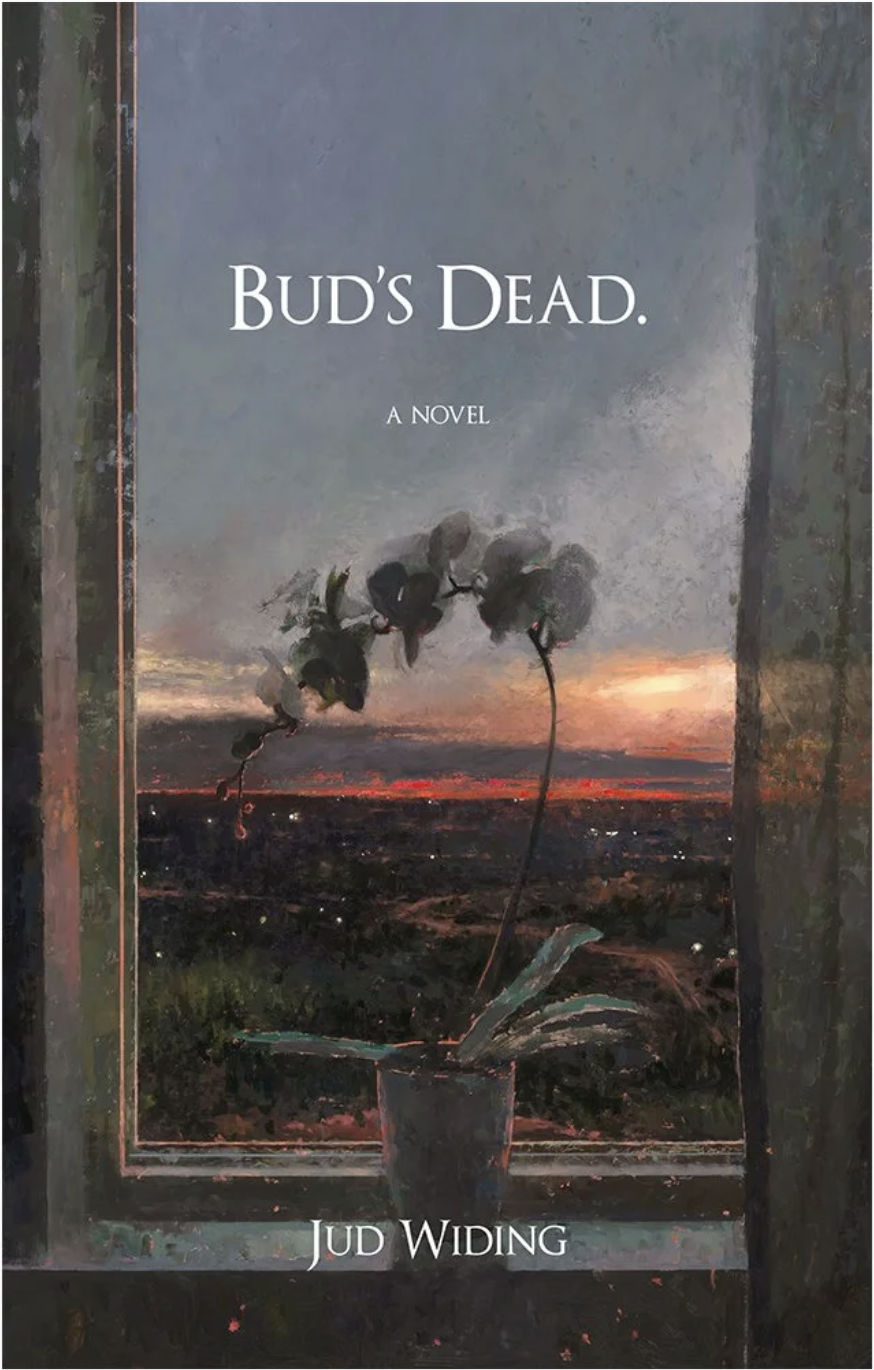
This is an excellent question; I’m still trying to figure out the answer! My best guess, which helped keep me on track while prepping/writing Bud’s Dead., is that it’s a balance between big question marks and little exclamation points. The question marks are the characters - it’s fun to puzzle over characters, be surprised by them, try to make sense of them, which for me as both reader and writer is one of the chief joys of the “not much happens” story. But there can be too much of a good thing. If the characters are too inscrutable, and the reader can’t make heads or tails of who anybody is or why they’re doing what they’re doing, said reader might arrive at that most lethal question: “who cares?”
To offset the potentially alienating effect of non-stop question marks, I thought in terms of little exclamation points: tiny micro-dramas in which the proximate objectives and stakes (low though they may be) are all crystal clear. What I found in all of my favorite “not much happens” stories is that these messy, fascinating, complicated characters are, from scene to scene, pursuing highly comprehensible little mini-objectives. These are enough to keep the reader engaged in the narrative and connected to the characters even without fully making sense of them, which I find to be a prerequisite to start teasing apart all those question marks.
My absolute favorite “not much happens” stories are, I’m sorry to say, actually movies. Specifically the work of Kelly Reichardt, which was collectively the biggest inspiration for Bud’s Dead. All of her films are outstanding, but in 2008 she made one called "Wendy and Lucy" which, to my mind, is the absolute pinnacle of the “slice of life” story. Devastating without being melodramatic. Can’t recommend it enough.
Are there any fiction genres you're interested in trying or would never write?
Many and none, respectively! On the latter count, there are certainly some genres I’m less interested in than others, but I also don’t think about genre too much as I’m writing. I’ll follow a story wherever it wants to go! In terms of things I’m actively interested in writing, I’m dying to write an epistolary novel. There’s something about that structure, where the vast majority of the story is actually happening outside of the prose we’re reading, that I find both daunting and intriguing. Prime opportunity for unreliable narrators too, which is a perennial favorite of mine. I haven’t had a good idea for one yet, but I trust one will fall on me someday.
What have you found to be your best sources of inspiration for "slice of life" stories?
If I just say “life” I feel like I’ll get yanked off stage with a big cane, so if I’m trying to zero in on one thing it’d be sounds. I describe ambient sounds a lot in my writing - there are a few recurring noises in Bud’s Dead. that are particularly significant - because that’s usually what anchors me in a setting. It’s well-observed that music can be a direct line to feeling, and I’ve found that to be true of just about any noise for me, particularly the mundane ones. There’s a lot of nuance in noise, too, which I find endlessly fascinating. For example, I feel some interplay between distance of a sound and emotional valence. A dog barking right next to me is a bit grating, but one barking far away carries a different emotional payload. Usually melancholy, especially if it’s night. What’s up with that? It’s all just dogs at different distances! It’s an abstract kind of inspiration I get from this ("this" being noise in general, not barking dogs specifically), but it’s something that really feeds me. So naturally, I work in a medium without sound!